
Bucket Wringer Mop Guide: How to Choose the Right Commercial Mop Bucket for Your Facility
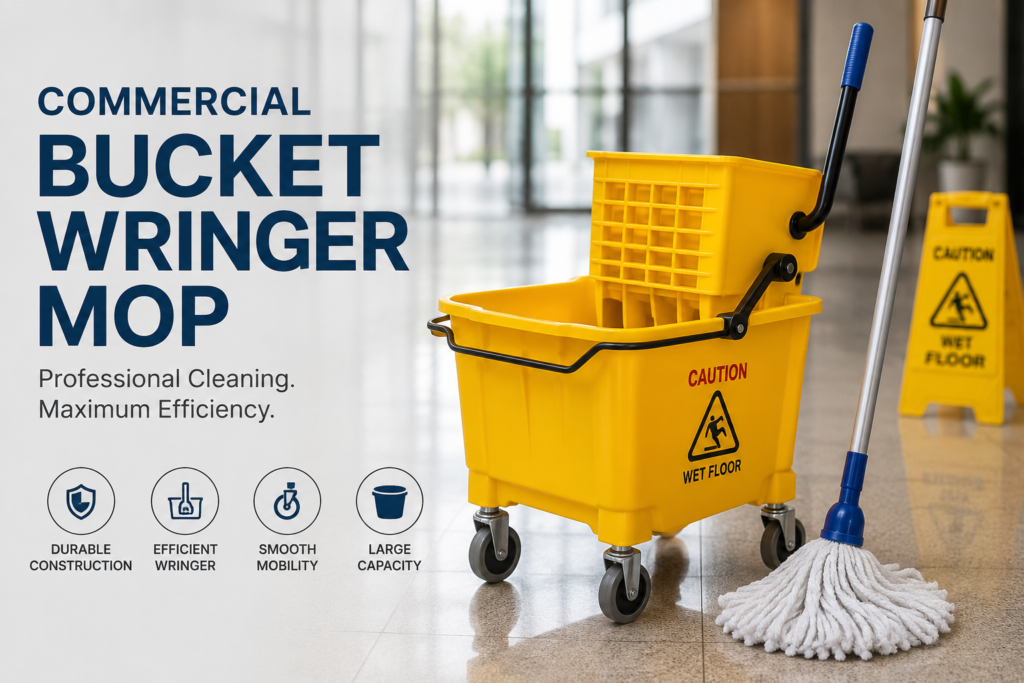
If you manage cleaning operations for a commercial building, a mop and bucket alone won’t cut it. A bucket wringer mop is the backbone of any serious floor care program, giving custodial teams a fast way to control moisture and keep floors safe and streak-free. Whether you’re outfitting a school, hospital, restaurant, or warehouse, choosing the right mop bucket with wringer affects how efficiently your staff cleans and how long the equipment lasts. This guide from Foxhole Depot covers what to know before you buy.
Table of Contents
- What is a Bucket Wringer Mop?
- Benefits of a Commercial Mop Bucket with Wringer
- Types of Mop Buckets with Wringers
- Buying Guide
- Common Mistakes to Avoid
- Maintenance Tips
- FAQs
- Conclusion
What is a Bucket Wringer Mop?
A bucket wringer mop is a floor cleaning system that pairs a commercial mop bucket with a built-in wringing mechanism, letting custodians squeeze excess water and cleaning solution out of a mop head before or after each pass. The wringer compresses the mop head over the bucket, sending dirty water back into the reservoir instead of onto the floor.
This combination is standard janitorial equipment in facility maintenance because it speeds up wet floor cleaning while reducing puddling, streaking, and slip hazards. You’ll find it listed under other names too, including commercial mop bucket, industrial mop bucket, or janitorial mop bucket all describing the same core piece of floor cleaning equipment and housekeeping equipment used for office cleaning, school cleaning, warehouse cleaning, and healthcare facilities alike.
Benefits of a Commercial Mop Bucket with Wringer
A quality cleaning mop bucket does more than hold water it’s one of the most valuable cleaning tools in any commercial cleaning equipment lineup:
- Faster cleaning cycles — wringing at the bucket cuts the time it takes to cover large areas in offices, warehouses, and restaurants.
- Better sanitation — removing dirty water between passes keeps contaminated cleaning solution from spreading.
- Safer floors — controlled moisture reduces wet floor cleaning hazards behind many slip-and-fall incidents.
- Longer equipment life — heavy duty mop buckets use thicker plastic and steel wringer mechanisms built for daily industrial cleaning.
- Less physical strain — down-press and side-press wringers save staff from twisting mop heads by hand.
- Versatility — the same bucket works with cotton, string, or microfiber mop heads across nearly any floor cleaning routine.
Types of Mop Buckets with Wringers
Not all mop buckets are built the same. Before buying, it helps to know the main categories professional cleaning teams rely on.
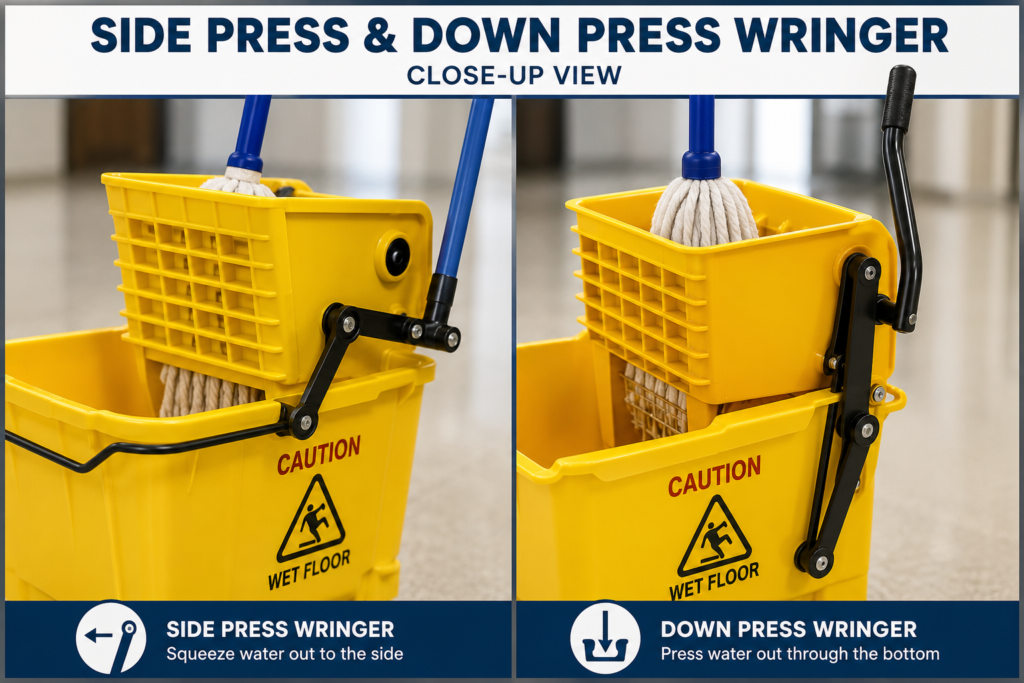
Side-Press vs. Down-Press Bucket Wringer Mop Systems
A side-press wringer squeezes the mop head from the side using a lever, common on compact janitorial carts. A down-press (or top-press) wringer uses a plunger-style motion, offering more leverage for larger commercial mop bucket setups used in warehouses and industrial facilities.
Buckets also vary by compartment design. Single-compartment buckets hold one cleaning solution and suit smaller offices or schools. Dual-compartment (two-bucket) systems separate clean solution from dirty rinse water, recommended for restaurant cleaning and healthcare cleaning where sanitation is critical. Mobile cleaning cart combos add storage caddies and chemical dispensers practical for large commercial buildings and multi-floor facility maintenance.
Buying Guide: How to Choose the Right Bucket Wringer Mop
Picking the right bucket wringer mop sometimes called a professional mop bucket comes down to matching the equipment to your facility’s size and cleaning demands.
- Capacity — a 26–35 quart bucket suits most commercial buildings; larger industrial mop bucket sizes work better for warehouses.
- Wringer type — down-press wringers handle heavier mop heads and larger volumes; side-press units are lighter and easier to maneuver.
- Material — look for high-density polyethylene construction that resists cracking under daily industrial cleaning use.
- Mobility — caster wheels rated for commercial use make it easier to move a loaded cleaning cart across long floors.
- Compatibility — confirm the wringer fits your preferred mop type, whether that’s a microfiber mop bucket setup or a cotton string mop.
- Compliance needs — healthcare and restaurant cleaning environments often call for color-coded buckets that prevent cross-contamination.
Common Mistakes to Avoid
Even experienced janitorial teams make avoidable errors with their mop bucket with wringer:
- Overfilling the bucket, which makes wringing harder and raises spill risk.
- Using the wrong cleaning solution concentration, which can damage flooring or weaken disinfecting power.
- Skipping the wringer and twisting mop heads by hand, which slows professional cleaning and wears out fibers faster.
- Letting dirty water sit in the bucket overnight instead of dumping and rinsing it, which breeds bacteria.
- Choosing a bucket too small for the facility, forcing frequent refills that waste time.
Maintenance Tips for Your Mop Bucket with Wringer
Like any maintenance equipment, a mop bucket with wringer lasts years longer with basic upkeep and routine commercial maintenance:
- Rinse the bucket and wringer mechanism after every shift to prevent residue buildup from cleaning chemicals.
- Inspect the wringer lever, rollers, or plunger periodically for cracks or looseness.
- Store the bucket upside down or vented so it can air-dry, which helps stop mold growth.
- Lubricate caster wheels regularly if the cleaning cart sees heavy daily use.
- Replace worn wringer rollers or handles instead of the entire unit to save on facility maintenance costs.
FAQs
What is the difference between a mop bucket and a bucket wringer mop? A standard mop bucket just holds water. A bucket wringer mop adds a mechanism that squeezes excess moisture from the mop head before you mop.
What size mop bucket do I need for a commercial building? Most offices and schools do well with a 26–35 quart bucket, while warehouses often need 30+ quart capacity.
Is a microfiber mop bucket different from a standard mop bucket? It uses the same wringer style but is sized and shaped for flat microfiber pads instead of string or cotton mop heads.
How often should I clean my mop bucket? Rinse it after every use and deep-clean it weekly to prevent cleaning solution residue and bacteria buildup.
Do healthcare facilities need special mop buckets? Yes. Many healthcare cleaning programs use dual-compartment or color-coded buckets to separate clean and dirty water.
What’s the average lifespan of a heavy duty mop bucket? With proper care, commercial-grade buckets typically last three to five years, though wringer components may need replacing sooner.
Conclusion
A dependable bucket wringer mop is one of the smartest investments a facility can make in its cleaning program. It speeds up floor cleaning, protects staff from slip hazards, and holds up to daily commercial cleaning demands, whether you manage an office, a school, or an industrial facility. The right commercial mop bucket pays for itself in labor savings and fewer wet-floor incidents.
Get Your Bucket Wringer Mop from Foxhole Depot
Foxhole Depot stocks heavy duty mop buckets, wringer systems, and the bulk cleaning supplies and sanitation supplies your team needs to keep floors clean and safe. Browse our buckets and janitorial supplies collection and equip your facility with gear built to last.