
The Complete Guide to Commercial Cleaning Supplies for U.S. Businesses
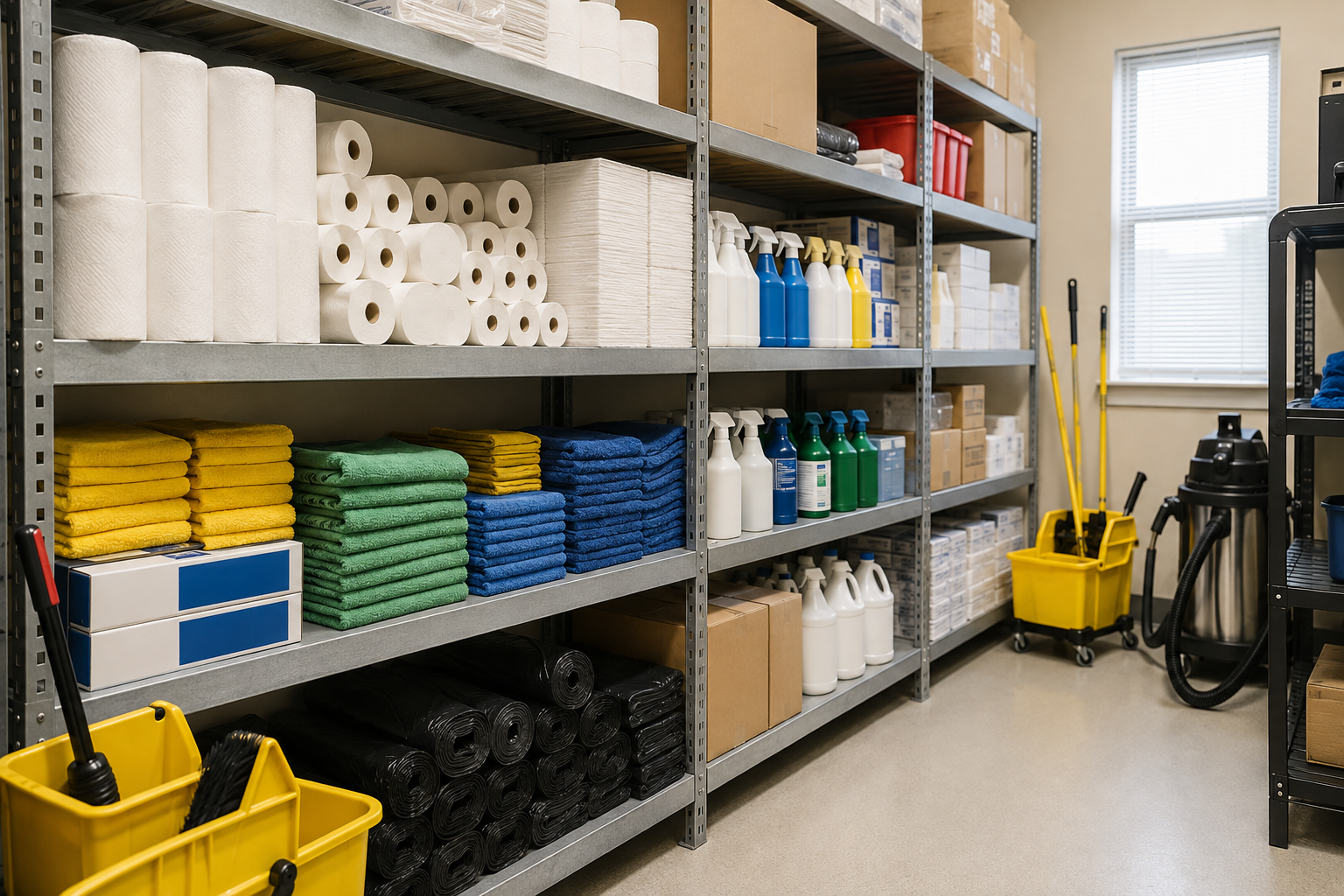
Walk into any well-run facility a restaurant kitchen, a hotel lobby, an office break room, a school hallway and you can usually tell within seconds whether the people behind the scenes have their systems dialed in. That impression almost always comes down to one unglamorous truth: the right commercial cleaning supplies were in the right hands at the right time.
For facility managers, restaurant owners, property managers, and procurement teams, sourcing cleaning supplies isn’t a one-time errand. It’s an ongoing operational responsibility that affects health inspections, guest experience, employee morale, and the bottom line. This guide breaks down what actually belongs in a commercial cleaning supply program, how to buy it smart, and the mistakes that quietly drain budgets every year.
Why Commercial Cleaning Supplies Matter More Than Most Businesses Realize
It’s easy to treat cleaning supplies as an afterthought something to reorder when the cabinet looks empty. But in a commercial setting, cleaning isn’t cosmetic. It’s compliance, safety, and brand reputation rolled into one.
Restaurants and food service operations are held to strict sanitation standards, and inspectors don’t accept improvisation. Hotels and hospitality businesses are judged instantly on cleanliness by guests who rarely give second chances. Offices and schools need consistent hygiene protocols to reduce illness and downtime. In every one of these environments, having dependable janitorial supplies on hand isn’t a nice-to-have it’s infrastructure.
The Core Categories of a Commercial Cleaning Program
Most facilities build their cleaning operation around a handful of essential categories. Understanding each one helps you buy with intention instead of guessing.
Cleaning towels and microfiber cloths These are the workhorses of any cleaning cart. Microfiber cloths outperform cotton rags in nearly every commercial application they trap more dust and bacteria, hold up to repeated laundering, and leave fewer streaks on glass and stainless steel. Disposable cleaning towels are popular in kitchens and healthcare-adjacent spaces where cross-contamination is a real concern.
Trash bags Trash bags seem simple until you’re buying the wrong gauge for the wrong receptacle and dealing with tears, leaks, and complaints from custodial staff. Commercial operations typically need a range of sizes and thicknesses depending on whether the bag is lining a small office bin or a heavy-duty kitchen receptacle.
Restroom supplies Restrooms are one of the most scrutinized areas in any facility. Toilet paper, facial tissue, hand soap, and dispenser systems all fall under this category, and running out mid-shift is one of the fastest ways to generate complaints.
Commercial cleaning equipment Mops, buckets, dust pans, sponges, and dispensing systems make up the physical toolkit that turns cleaning products into a repeatable process. Equipment that’s mismatched to the space the wrong mop head, an undersized bucket slows staff down and increases labor cost per cleaning cycle.
Facility maintenance basics Beyond daily cleaning, facilities need supplies that support ongoing upkeep: storage and organization systems, PPE for staff handling chemicals, and general workplace cleaning supplies that don’t fall neatly into “daily janitorial” but still need to be stocked and accessible.
What Belongs in a Well-Stocked Supply Closet
A supply closet that actually works under pressure during a busy shift, a surprise inspection, or a spill emergency tends to include the following:
- A rotating stock of microfiber cloths in multiple colors for color-coded cleaning zones
- Disposable cleaning towels for kitchen and food-contact surfaces
- Trash bags in at least two size and thickness options
- Restroom supplies including toilet paper, facial tissue, and hand soap refills
- Dust pans, brooms, and mop systems appropriate to the flooring type
- Sponges for both light-duty and scouring tasks
- Dispensers that keep paper and soap products accessible and reduce waste
- PPE such as gloves for staff handling chemicals or high-contact surfaces
Buying Guide: How to Choose Commercial Cleaning Products the Right Way
Buying cleaning supplies for a single household is nothing like buying for a commercial operation. Volume, consistency, and cost-per-use matter far more than they do for a homeowner picking a spray bottle off a shelf. Here’s how experienced facility buyers approach it.
Start with usage frequency, not price per unit. A slightly higher case price often wins on cost-per-use once you factor in durability and coverage. This is especially true with microfiber cloths, which can be laundered and reused hundreds of times compared to disposable alternatives.
Match product to surface and task. Not every cleaning towel belongs on every surface. Kitchens need food-safe, low-lint options. Restrooms need moisture-resistant, quick-drying materials. Buying one universal product for every task usually means it performs adequately everywhere and well nowhere.
Buy trash bags by gauge, not just size. Mil thickness determines whether a bag holds up to sharp debris, wet waste, or heavy loads. A thin bag might be fine for office paper waste but will fail fast in a kitchen or loading dock.
Standardize restroom supplies across locations. If you manage multiple sites, standardizing restroom supplies and dispenser systems simplifies reordering and keeps the guest or employee experience consistent everywhere.
Factor in storage space. Bulk commercial cleaning products save money but require real storage capacity. Before committing to case quantities, confirm your supply closet or back-of-house space can actually hold what you’re ordering.
Prioritize supplier reliability over one-time savings. A supplier that’s consistently in stock on core janitorial supplies is worth more long-term than one offering a slightly lower price with unreliable fulfillment.
Best Practices for Managing Commercial Cleaning Supplies
Buying the right products is only half the equation. How a facility manages, stores, and deploys those supplies determines whether the investment actually pays off.
- Set par levels for every category. Know your minimum on-hand quantity for trash bags, restroom supplies, and cleaning towels so reordering happens before you run out, not after.
- Color-code cleaning cloths by zone. Using different colored microfiber cloths for restrooms, kitchens, and general areas prevents cross-contamination and simplifies staff training.
- Train staff on proper equipment use. Commercial cleaning equipment lasts longer and performs better when staff understand correct use — wringing mops properly, replacing worn cloths, and not overloading dispensers.
- Rotate stock using first-in, first-out. Especially for chemical-based commercial cleaning products, older stock should be used before newer stock to avoid degradation.
- Centralize your supply ordering. Facilities that consolidate purchasing across departments or locations typically get better consistency and pricing than those ordering piecemeal.
- Do a quarterly supply audit. A short walk-through of storage areas every quarter catches waste, overstock, and gaps before they become a problem.
Common Mistakes Businesses Make with Cleaning Supplies
Even well-run operations fall into predictable traps when it comes to workplace cleaning supplies. Watch for these:
- Underestimating restroom supply usage. Restroom traffic spikes are hard to predict, and running short during peak hours creates one of the most visible complaints a facility can receive.
- Buying cleaning equipment that doesn’t match the space. A mop bucket sized for a small office won’t hold up in a warehouse, and vice versa — mismatched equipment slows staff down.
- Treating microfiber cloths as disposable. Quality microfiber cloths are designed for repeated laundering. Discarding them after one use erases the cost advantage they’re supposed to provide.
- Choosing trash bags based on price alone. A cheaper bag that tears mid-shift costs more in labor, mess, and re-cleaning than a slightly pricier, properly rated one.
- Letting supply ordering be reactive instead of planned. Waiting until a cabinet is empty to reorder leads to rush shipping costs and inconsistent stock.
- Overlooking facility maintenance basics. Dust pans, sponges, and dispensers are easy to forget in bulk reordering but are just as essential as the core products.
- Not training new staff on supply protocols. Turnover in cleaning and facilities staff is common; without a repeatable on-boarding process, product misuse and waste creep back in.
10 Frequently Asked Questions
1. What are commercial cleaning supplies? Commercial cleaning supplies are the products and tools businesses use to maintain hygiene and cleanliness in facilities, including cleaning towels, trash bags, restroom supplies, and cleaning equipment.
2. How are janitorial supplies different from household cleaning products? Janitorial supplies are formulated and packaged for higher-volume, higher-frequency commercial use, with an emphasis on durability, bulk cost-efficiency, and compliance with commercial sanitation standards.
3. How often should a business restock cleaning supplies? It depends on facility size and traffic, but most operations benefit from setting par levels and reordering weekly or biweekly rather than waiting until supplies run out.
4. Are microfiber cloths better than paper towels for commercial use? For most surfaces, yes microfiber cloths trap more debris, are reusable, and reduce streaking, making them more cost-effective over time than single-use paper towels.
5. What trash bag thickness should I use for a commercial kitchen? Kitchens typically need a higher mil thickness to handle wet, heavy, or sharp waste without tearing, compared to the lighter bags suitable for office paper waste.
6. What restroom supplies should every facility keep in stock? At minimum: toilet paper, facial tissue, hand soap, and functioning dispensers, along with backup rolls stored on-site for peak usage periods.
7. How do I choose the right commercial cleaning equipment? Match equipment to your flooring type, facility size, and traffic volume — the right mop, bucket, and dust pan setup should reduce labor time, not add to it.
8. Can buying cleaning supplies in bulk actually save money? Yes, in most cases, as long as you have adequate storage and the supplies won’t expire or degrade before you can use them.
9. What’s the biggest mistake businesses make with facility maintenance supplies? Reactive ordering waiting until supplies run out instead of tracking usage and reordering proactively is the most common and costly mistake.
10. Where can I buy commercial cleaning supplies for my business? Foxhole Depot supplies commercial cleaning products, janitorial supplies, and facility maintenance essentials in bulk quantities designed for U.S. businesses of every size.
Conclusion
A commercial cleaning supply program doesn’t need to be complicated, but it does need to be intentional. Stocking the right cleaning towels, microfiber cloths, trash bags, and restroom supplies and pairing them with equipment and habits that actually support daily operations is what separates facilities that run smoothly from those that are constantly playing catch-up. Whether you’re managing a single location or several, the businesses that treat cleaning supplies as core infrastructure, not an afterthought, are the ones that stay ahead of inspections, complaints, and unnecessary costs.
CTA
Ready to simplify your supply ordering? Browse Foxhole Depot’s full range of commercial cleaning supplies and janitorial products, and stock your facility with the essentials it actually needs.