
Commercial Dish Machine Detergent: How to Choose the Right Type for Your Kitchen
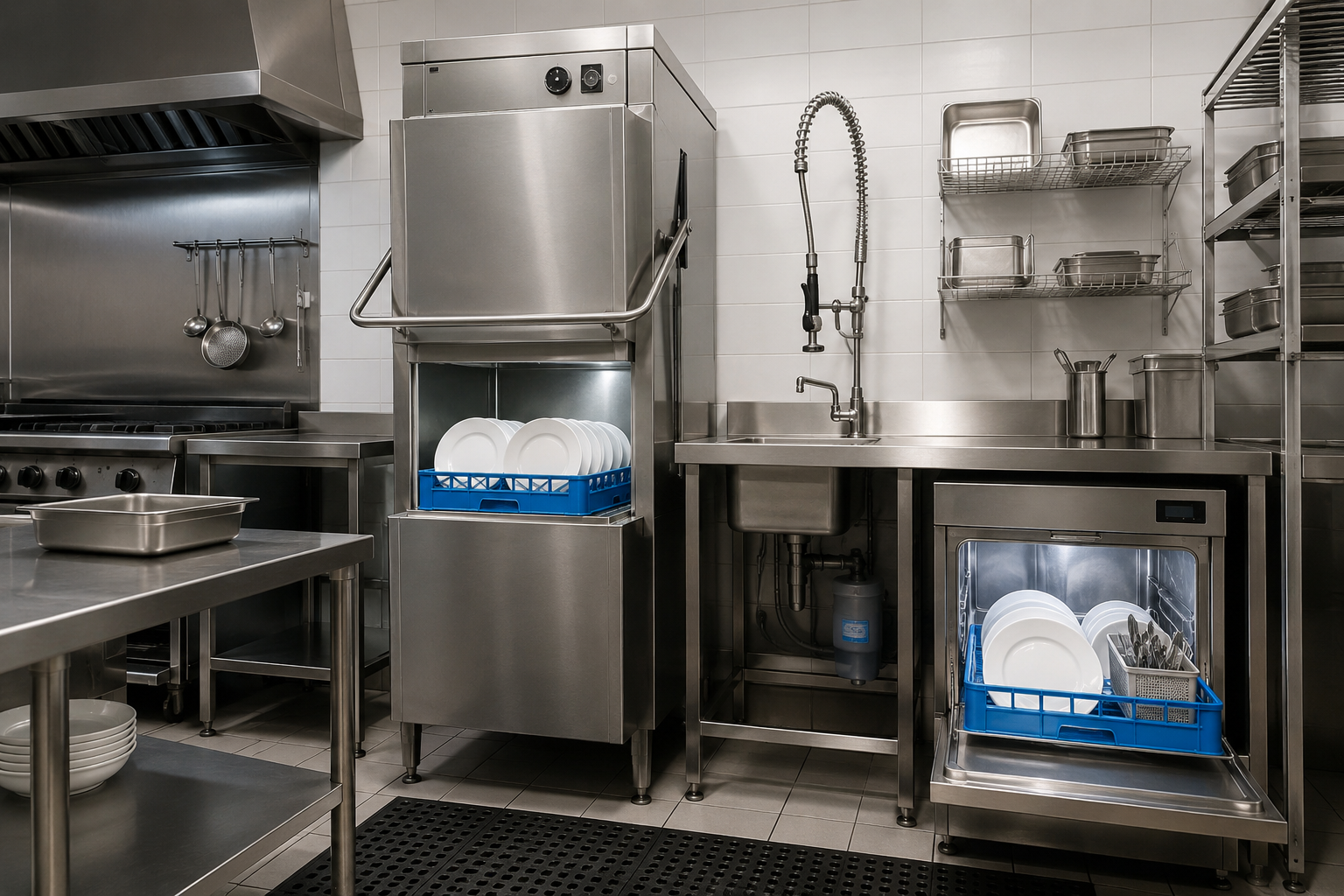
Commercial dish machine detergent comes in two main types high-temperature and low-temperature and choosing the right one depends entirely on which kind of dish machine your kitchen runs. High-temp machines sanitize with hot water (typically 180°F at final rinse) and pair with a detergent formulated to work at that heat. Low-temp machines sanitize chemically at lower water temperatures and require a different detergent plus a separate sanitizing agent. Using the wrong type can mean spotty dishes, film buildup, or dishes that aren’t actually sanitized a real compliance issue for restaurants, hotels, schools, and healthcare kitchens.
Direct Answer: High-Temp vs. Low-Temp Detergent
The single biggest factor in picking a commercial dish machine detergent is your machine’s sanitizing method, not brand preference or scent:
- High-temp machines rely on hot water (commonly 180°F final rinse, per the FDA Food Code) to sanitize, so they need a detergent designed to clean effectively at that temperature without breaking down.
- Low-temp machines use lower wash and rinse temperatures and depend on a chemical sanitizer added separately to kill bacteria. Their detergent is formulated for lower-heat cleaning and won’t sanitize on its own.
Mixing these up running a low-temp detergent in a high-temp machine, or skipping the chemical sanitizer step on a low-temp unit undermines both cleaning performance and food-safety compliance.
Key Things to Know
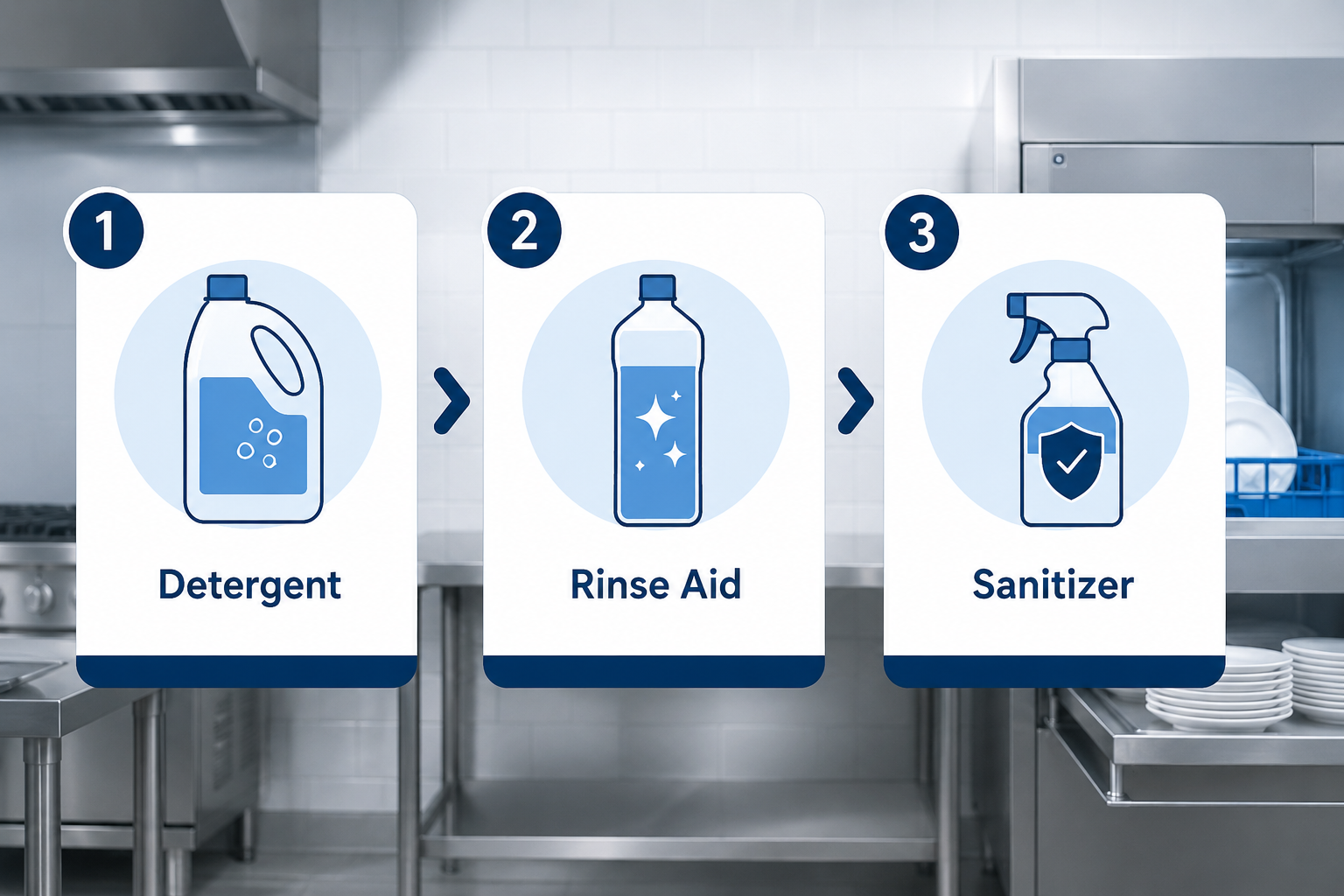
- Detergent, rinse aid, and sanitizer are three separate products. Detergent cleans; rinse aid prevents spotting and speeds drying; sanitizer (low-temp systems only) kills bacteria. None of the three substitutes for another.
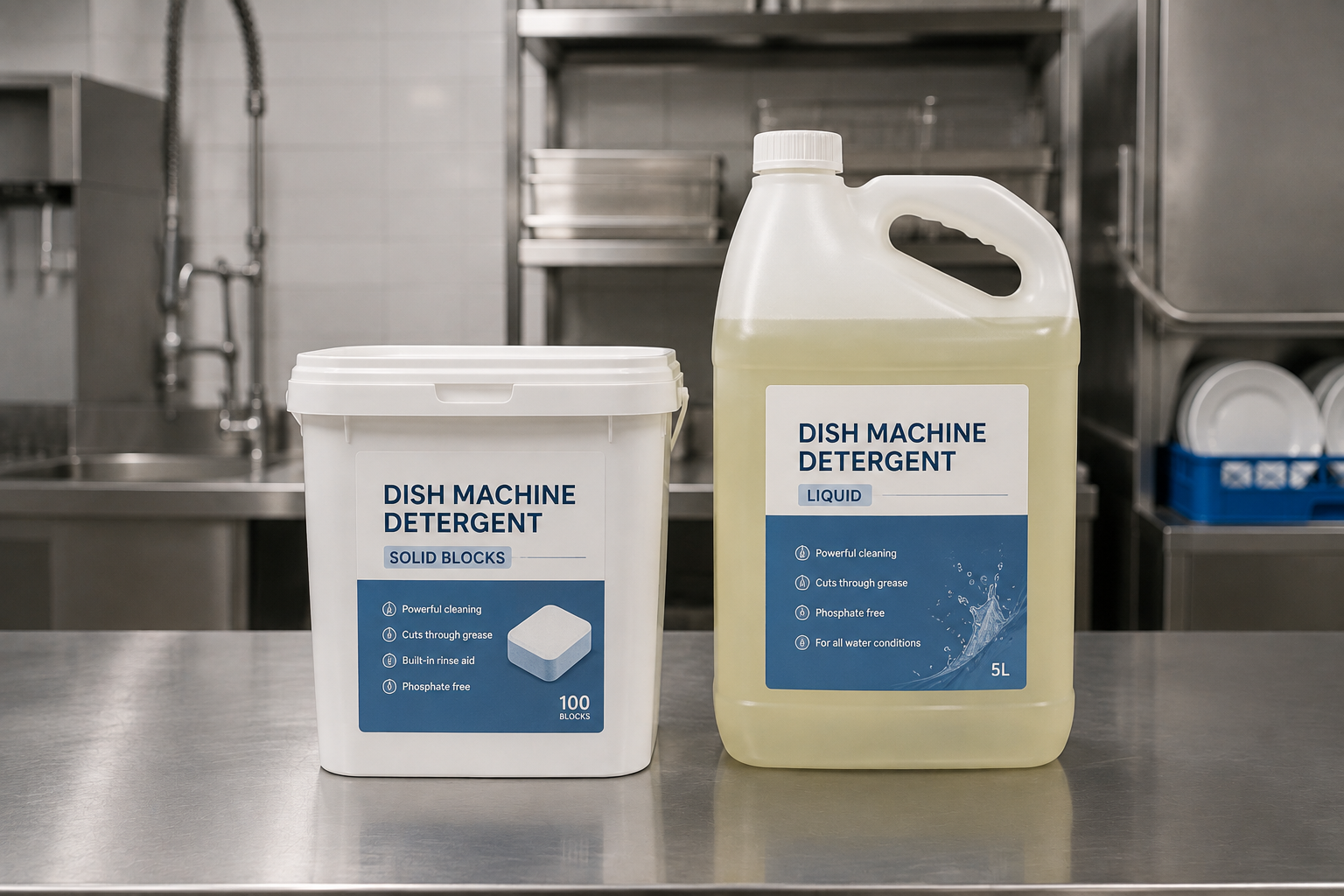
- Solid vs. liquid detergent is mostly a dispensing and storage preference. Solid (block or powder) detergents work with solid-feed dispensers, while liquid detergents pair with liquid pumps check what your existing dispenser system takes before switching formats.
- Water hardness affects performance. Hard water can reduce detergent effectiveness and increase spotting, which is one reason rinse aid matters even on machines that already sanitize with heat.
- Metal-safe formulas exist for kitchens washing aluminum, silver, or other metals that standard alkaline detergents can dull or discolor over repeated cycles.
- Manual glass washing (bar glassware) typically uses a separate, low-sudsing detergent formulated not to leave a soapy residue that affects beer head retention.
How to Choose the Right Product
- Identify your machine type first. Check the equipment spec plate or manual this determines whether you need a high-temp or low-temp detergent, full stop.
- Match detergent format to your dispenser. Solid-feed systems need solid detergent (block or powder); liquid-pump systems need liquid concentrate.
- Add rinse aid for any machine. Rinse aid reduces spotting and speeds drying on both high-temp and low-temp machines and is typically dispensed automatically alongside detergent.
- Add sanitizer only for low-temp machines. High-temp machines sanitize with heat; low-temp machines require a separate chemical sanitizer to meet food-safety requirements.
- Check for metal-safe or glass-safe formulas if your wash load includes aluminum cookware, silver, or bar glassware.
Common Mistakes to Avoid
- Assuming any “dish soap” works in a machine. Manual dish soap is formulated to suds; machine detergent is low- or no-suds, since suds interfere with the spray-arm wash action and can cause overflow.
- Skipping the sanitizer on a low-temp machine because the water “feels hot enough.” Low-temp machines are not designed to reach sanitizing temperatures with water alone.
- Ignoring rinse aid and blaming spotty glassware on the detergent, when the real fix is adding or adjusting rinse aid dosing.
Foxhole Depot Solution
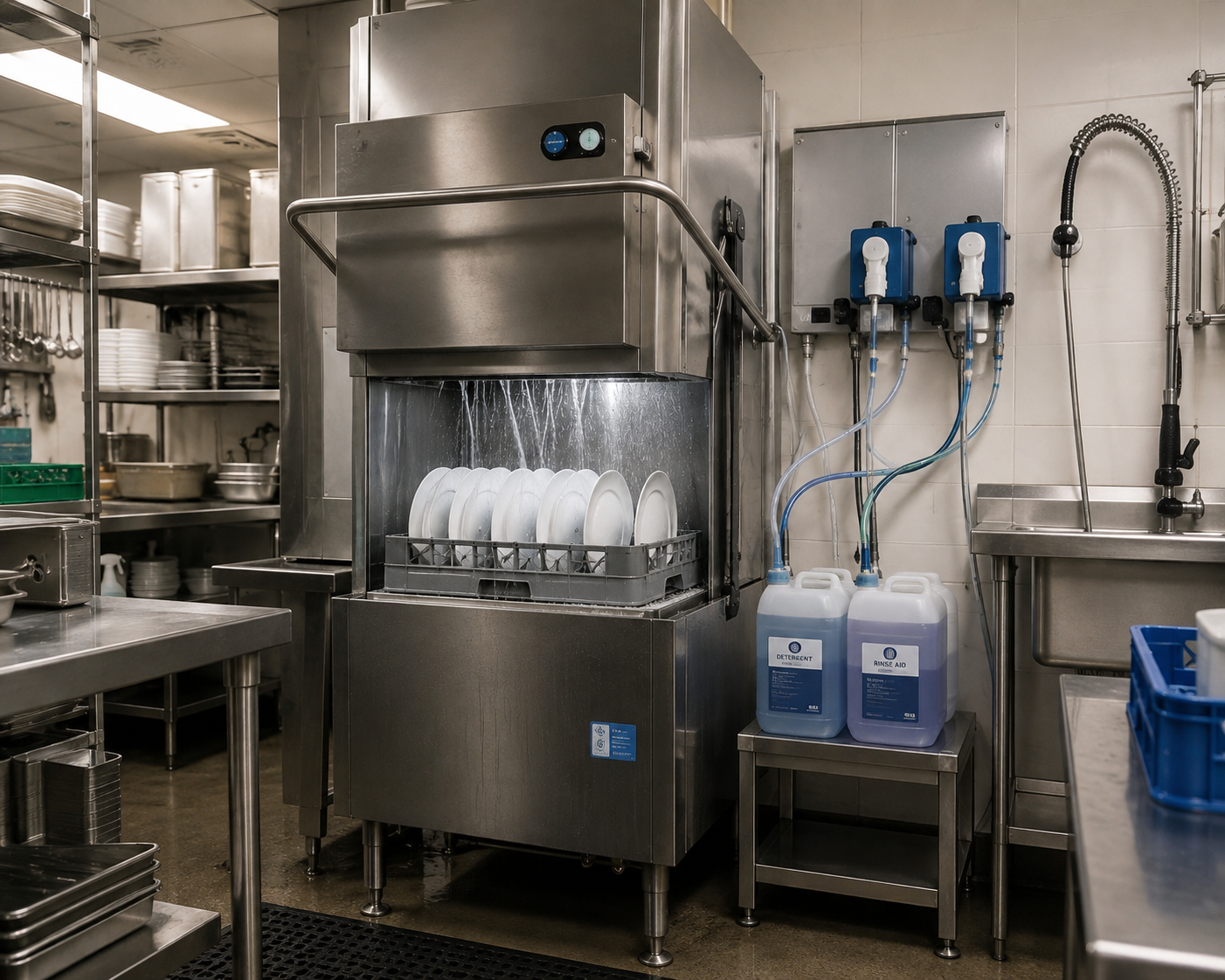
Foxhole Depot carries dish machine detergent for both high-temp and low-temp systems, in solid and liquid formats, along with the rinse aid and sanitizer to complete the wash cycle. For high-temp machines, options include Noble Chemical’s Power Liquid Dish Washing Machine Detergent and Acclaim Solid Dish Machine Detergent, paired with Dry-It Plus Rinse Aid for spot-free drying. For low-temp systems, Advantage Chemicals Low-Temperature Dish Washing Machine Detergent pairs with the Low-Temp Dish Washing Machine Sanitizer to complete a compliant wash cycle. Kitchens washing aluminum cookware or flatware can look at the Safe-Block Metal-Safe ware-washing Detergent to avoid dulling or discoloration.
Frequently Asked Questions
Can I use the same detergent in a high-temp and low-temp machine? No. High-temp detergents are formulated to perform at hot-water temperatures, while low-temp detergents are designed for lower-heat cleaning and depend on a separate chemical sanitizer for food safety. Using the wrong type can reduce cleaning performance and create a sanitation gap.
Do I still need rinse aid if my machine already sanitizes with hot water? Yes. Rinse aid isn’t a sanitizing step it reduces water spotting and speeds drying on both high-temp and low-temp machines. Sanitizing and rinse-aid performance are separate functions.
What’s the difference between solid and liquid dish machine detergent? The difference is mainly dispensing format. Solid detergent (block or powder) works with solid-feed dispensing systems, while liquid detergent is used with liquid pump dispensers. Choose based on the dispenser equipment already installed in your kitchen.
Is a low-temp dish machine cheaper to run than a high-temp machine? This varies by kitchen and utility costs and isn’t something we can quantify without your specific equipment and rates. The detergent and sanitizer choice, however, is determined by which machine type you already have, not by cost comparison between the two.
Do I need a separate sanitizer for a high-temp dish machine? No. High-temp machines sanitize using hot water, typically a final rinse around 180°F per the FDA Food Code, so a separate chemical sanitizer isn’t required. Low-temp machines, by contrast, need a chemical sanitizer added to the wash cycle.